Playtest Research Assistant for Your Game
Powered by Lysto AI
Ask natural language questions about your playtests and get instant, evidence-backed insights from transcripts, surveys, player profiles, and study context without manually reviewing hours of data.
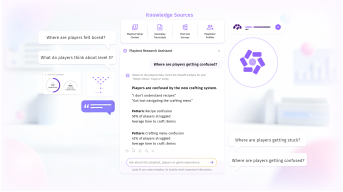

Your Playtest, Now Searchable Like a
Research Database
Playtest Research Assistant transforms your entire playtest dataset into a queryable insight layer.
Instead of navigating recordings, transcripts, and multiple dashboards, you can simply ask questions and receive structured, decision-ready insights instantly.
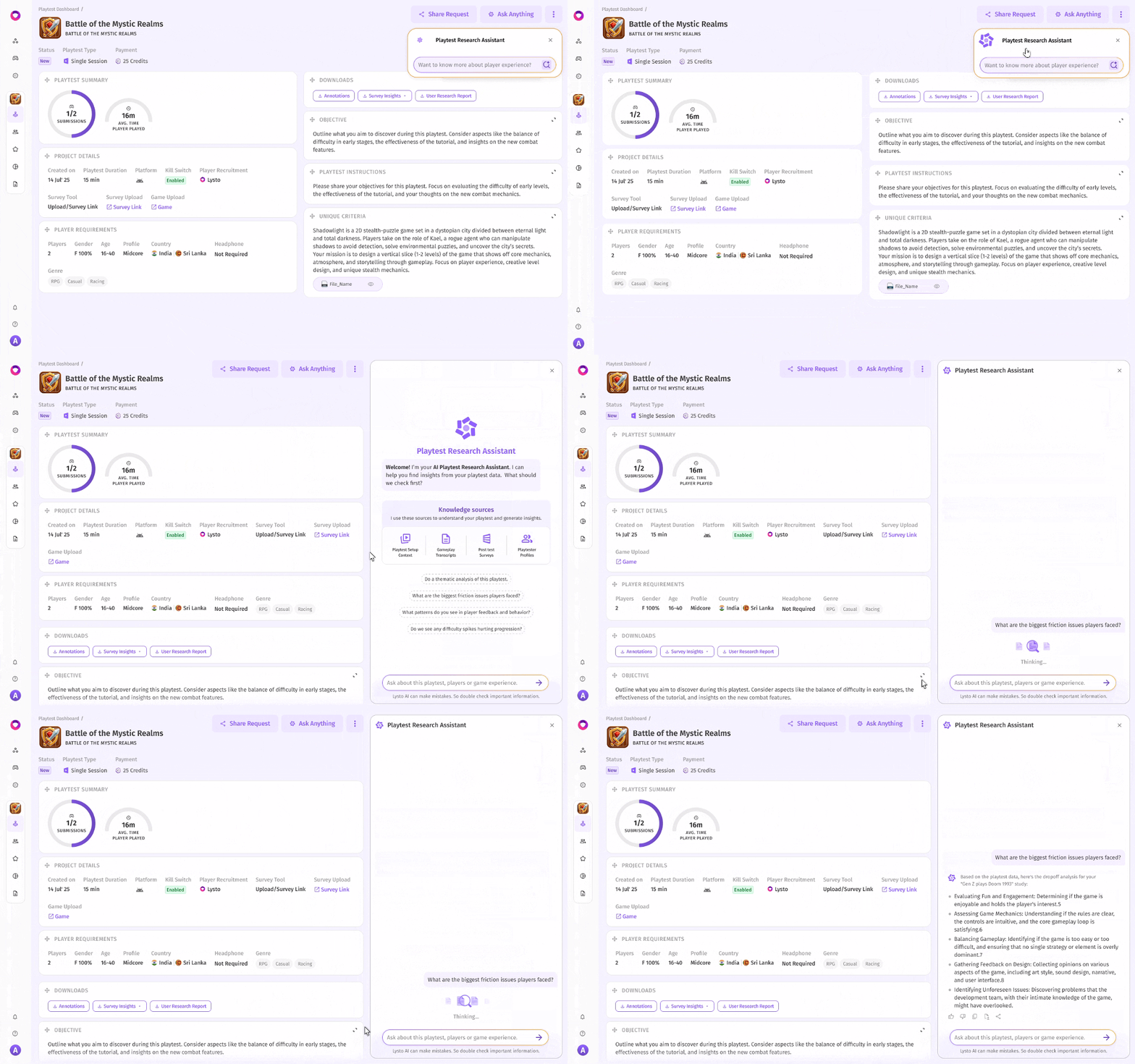
It synthesises:


Why Playtest AnalysisSlows Down Product Decisions
Game teams generate valuable playtest data but analyzing it efficiently remains a major bottleneck.

Key Pain Points
- Too many gameplay recordings to manually review
- Large volumes of transcript and survey text
- Insights scattered across multiple sources
- Slow synthesis from raw data to actionable findings
- Heavy reliance on researcher bandwidth
The result:
Delayed insights, missed patterns, and slower iteration on core gameplay decisions.
From Raw Playtest Data to Instant,Evidence-Backed Insights
Playtest Research Assistant allows teams to interact with their playtest as a living research repository. Simply ask a question, and the assistant analyses your study data to deliver structured answers grounded in real player evidence.
Clear findings
Supporting player quotes
Pattern summaries
Relevant timestamps
Segment comparisons
No manual synthesis required.
Ask Research Questions in Natural Language
Where are players getting confused or stuck?
What patterns show up across player feedback?
How do different player segments behave?
What did players think about the tutorial?
Perform a thematic analysis of this playtest

The assistant understands research intent and returns structured, contextual answers aligned with your study goals.
Context-Aware AnalysisAcross Your Entire Study
The Playtest Research Assistant reads and synthesises multiple data layers simultaneously, ensuring answers are grounded in the full research context—not isolated clips or quotes.
Transcripts from gameplay sessions
Post-playtest survey responses
Player profile metadata
Study setup and research objectives
AI-tagged annotations and themes
Every answer is traceable back to real evidence within your dataset.
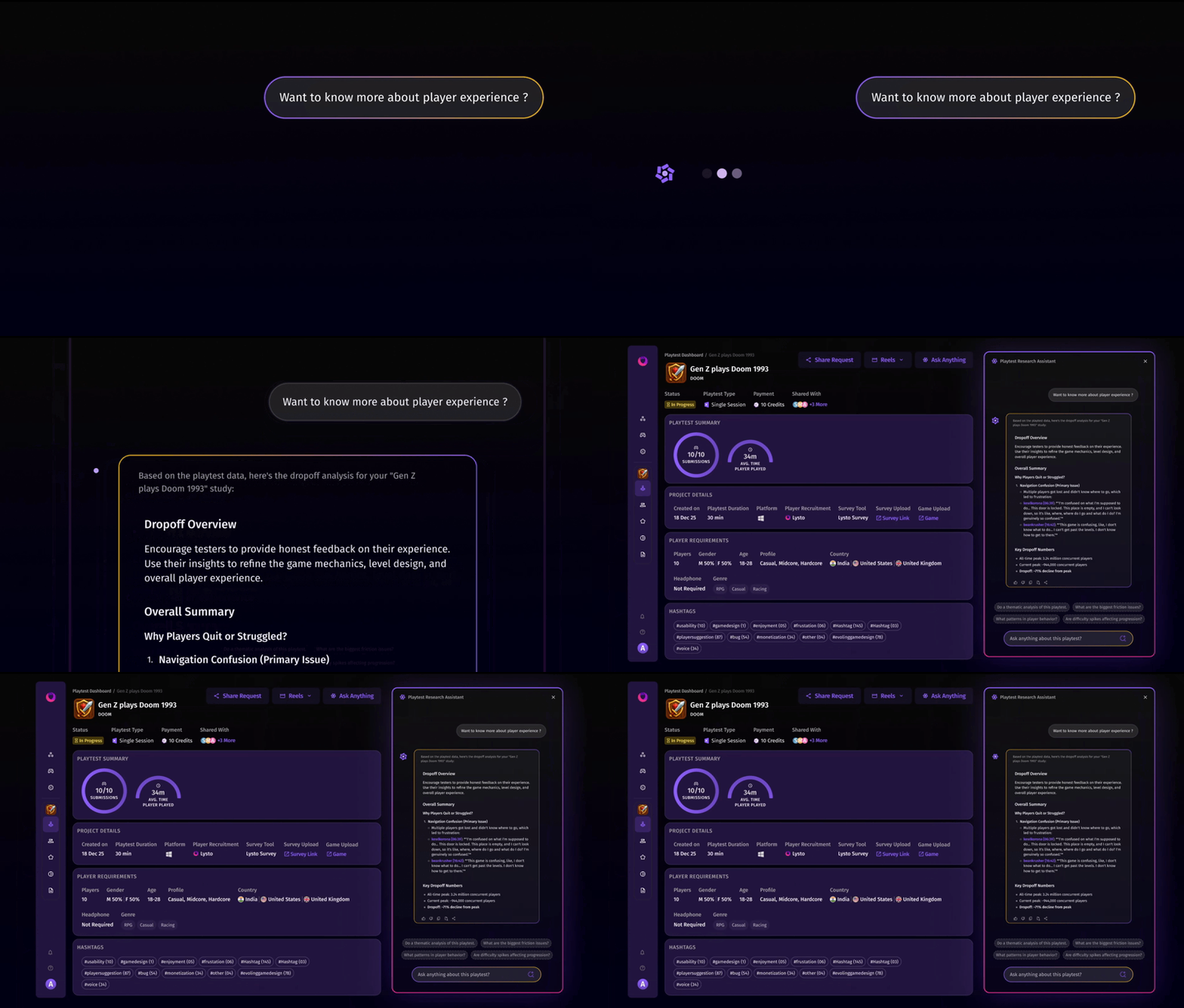
Not Just Clips.Not Just Dashboards.Real Research Intelligence.
Most playtest platforms provide raw recordings, clips, and fragmented data.Lysto's Playtest Research Assistant goes further by letting you directly query your playtest and receive structured, evidence-based answers in seconds.
It's like having an on-demand research analyst embedded in every project.
Built forProject Managers, Designers, and Researchers
Value points:
- Faster insight generation
- Reduced manual analysis time
- Immediate thematic synthesis
- Better cross-team alignment
- Faster product iteration cycles
- Less dependency on manual report creation

Frequently Asked Questions
Playtest Research Assistant is Lysto's in-dashboard feature that allows studios to ask natural-language questions about their playtests and receive instant, evidence-backed answers.
Instead of manually reviewing hours of footage and transcripts, teams query their playtest like a research database. The Research Assistant analyzes gameplay transcripts, survey responses, playtest setup, and player profiles from that specific playtest to provide structured answers with supporting evidence such as quotes, patterns, and statistics.
Teams can ask questions like "Where are players getting confused?", "What are the biggest friction points?", or "How do different player segments behave?" and receive decision-ready insights instantly.
Lysto's AI structures and analyzes feedback automatically, eliminating manual review. Our Playtest Research Assistant takes this further by transforming your playtest into a conversational agent, allowing you to ask questions about that playtest in simple, natural language and receive instant answers.
Moreover, the AI tags key moments like confusion, hesitation, and frustration, linking each to exact timestamps, helping teams analyse patterns surfacing across sessions.
With the Playtest Research Assistant, teams can focus on what’s important to, saving up to 70% of analysis time and allowing faster movement from data to decisions.
Playtesting reveals how real players experience a game. Without playtesting, studios risk building features that confuse players, missing friction points that drive churn, and making design decisions based on assumptions rather than evidence.
Modern game development demands faster iteration, higher quality at launch, and continuous optimization for live operations.
Our Player Experience Platform addresses these needs by combining structured playtesting with AI-powered analysis, allowing studios to test fast, gather insights from the right players, and move from assumptions to data-backed decisions.
Transcripts capture what players say as they play, revealing real-time reactions, moments of confusion, and decision-making processes.
Post-playtest surveys capture reflections after gameplay, allowing game studios to ask specific questions and gather targeted feedback on aspects of the game they want to understand deeper.
Together, they help developers understand friction points in onboarding or progression, validate whether features land as intended, identify gaps between player expectations and experience, and prioritize design improvements.
Lysto's AI structures gameplay recordings automatically by tagging key moments like confusion, hesitation, and frustration, linked to exact timestamps. Researchers receive individual player snapshots and group-level patterns without manual review.
With the Playtest Research Assistant, researchers can ask questions like "Where are players struggling most?" or "How do casual vs hardcore players differ?" and receive instant, evidence-backed answers from recordings, transcripts, and player profiles.
This increases researcher leverage, allowing focus on interpretation rather than manual processing, and enables faster turnaround from playtest to insights.
Yes, our Player Research Assistant can identify usability issues and player frustration points in your playtest.
Simply ask questions like “Where are players getting confused?”, “What are the biggest friction points?”, or “Which moments cause frustration?” and the assistant will instantly analyze gameplay transcripts, recordings, and survey responses to surface clear, evidence-backed answers.
It highlights patterns across players, tags key moments like hesitation or confusion with timestamps, and provides supporting quotes and insights, helping you quickly understand what’s not working and why.
Playtesting replaces assumptions with evidence, revealing the 'why' behind player behavior: where players struggle, what engages them, and whether the experience aligns with expectations.
It helps teams identify friction points, validate whether features deliver intended value, understand how different segments experience the game, and prioritize changes based on impact and frequency.
Teams can compare segments by analyzing how different groups experience the game based on age, region, gamer profile, genres played, and much more (based on advance targeting).
With the Playtest Research Assistant, teams ask comparative questions like "How do casual vs hardcore players experience this feature?" or "How do EU vs NA players differ?" The assistant pulls from player profile attributes and surfaces differences in behavior, sentiment, and engagement across segments.
This helps teams understand whether features resonate differently with different audiences and prioritize improvements based on which segments are most affected.
Teams can compare segments by analyzing how different groups experience the game based on age, region, gamer profile, genres played, and experience level.
With the Playtest Research Assistant, teams ask comparative questions like "How do casual vs hardcore players experience this feature?" or "How do EU vs NA players differ?" The assistant pulls from player profile attributes and surfaces differences in behavior, sentiment, and engagement across segments.
This helps teams understand whether features resonate differently with different audiences and prioritize improvements based on which segments are most affected.
Turn Your Playtests Into Instant Research Insights
Stop searching through data. Start asking smarter questions.
